The Eight Pillars of Ghana’s National AI Strategy
The strategy rests on eight pillars, balancing foundational enablers (governance, infrastructure, data, talent) with accelerators (innovation, adoption, investment, international cooperation). Three carry the most weight for early implementation, and they’re the ones that drew the most scrutiny from the panel.
The Responsible AI Authority: Ghana’s New Oversight Body
A new Responsible AI Authority will be incubated within Ghana’s Data Protection Commission (DPC) before transitioning into a standalone commission. The phased approach is pragmatic: it leverages existing institutional capacity at the DPC while a dedicated regulator is built out. The open question is how quickly the Authority will issue binding guidance, and whether it will have enforcement teeth at spin-out.
Compute Ambitions: Targeting 10²⁵ FLOPS by 2035
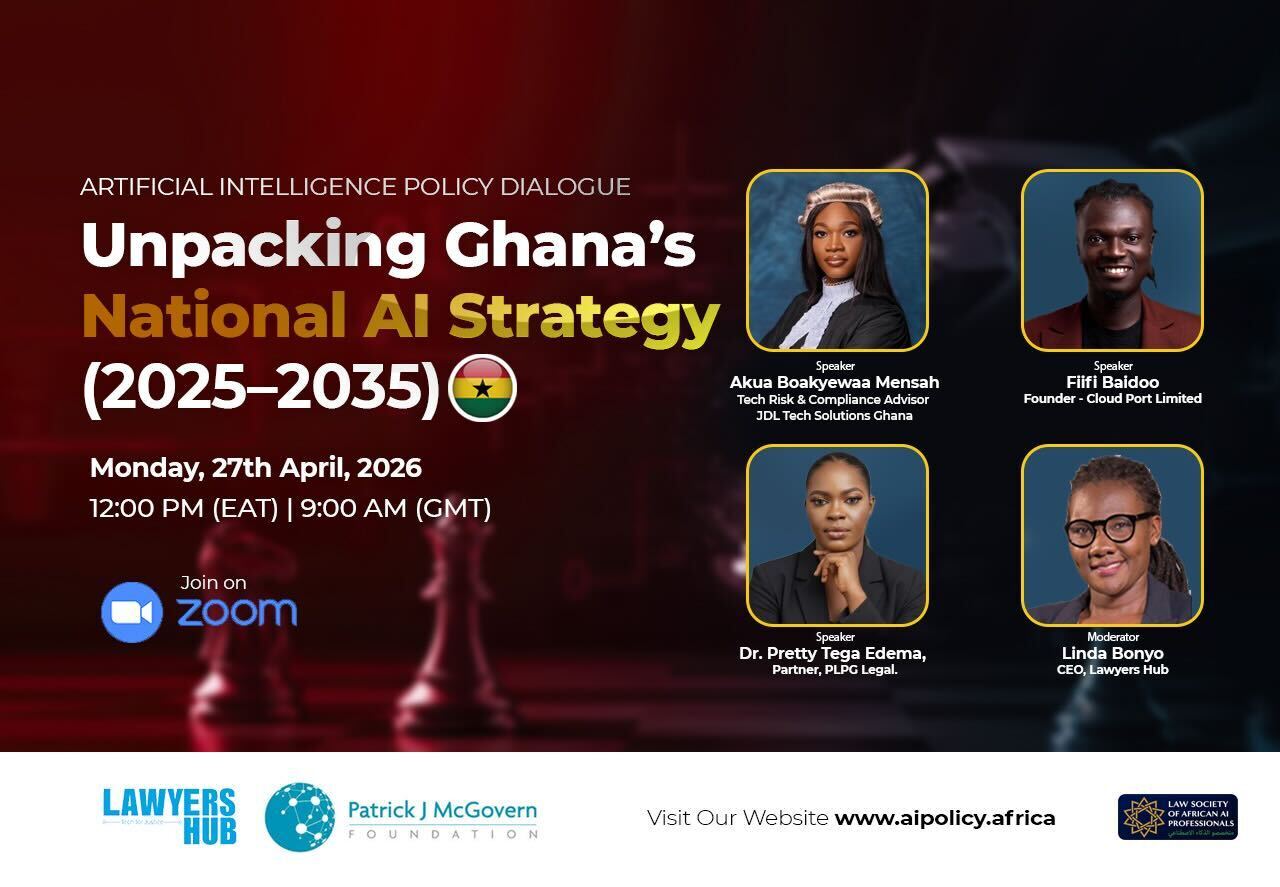
Ghana is targeting 10²⁵ FLOPS of national computing capacity by 2035, a figure that would put the country in striking distance of frontier-AI training workloads. Fiifi Baidoo, Founder of Cloud Port Limited, flagged the obvious tension: compute targets of this scale require energy infrastructure that Ghana’s current grid cannot reliably support. He also pointed to talent as a parallel bottleneck, urging the government to actively repatriate diaspora technologists and offer competitive incentives to slow brain drain. In other words, the FLOPS number is downstream of two harder problems: power and people.
The National AI Fund: 5 Billion Cedis to Start
The National AI Fund will launch with GHS 5 billion in seed capital across 2025–2030, scaling to GHS 15 billion by 2035. Designed to stimulate local innovation, the fund’s effectiveness will hinge on disbursement mechanics, who qualifies, how decisions are made, and whether early-stage Ghanaian startups can actually access it without being crowded out by incumbents.
Regulatory Framework: Why Ghana May Need an AI Act
Dr. Pretty Tega Edema, Partner at PLPG Legal, warned against the temptation to govern AI through existing data protection and consumer law alone. She argued for an explicit, riskbased AI legal framework along the lines of the EU AI Act, one that classifies AI systems by risk tier and attaches proportionate obligations. Without it, she cautioned, consumer safety risks being treated as a residual concern rather than a design constraint. This is the live debate across African AI policy right now: build standalone AI legislation, or extend existing regimes. Ghana’s strategy leaves the door open to either path.
Ecosystem, Procurement, and Talent
Akua Boakyewaa Mensah, Tech Risk and Compliance Advisor at JDL Tech Solutions Ghana, focused on the conditions that determine whether the strategy actually produces ahomegrown AI sector. Her three priorities: startup-friendly public procurement (so government becomes a first customer rather than a gatekeeper), tax reform to reduce friction on early-stage tech companies, and strict enforcement of data protection rules to build the trust layer that AI adoption depends on.
What This Means for African AI Policy
Ghana joins a small but growing group of African states with formal national AI strategies. The blueprint is ambitious, particularly on compute and funding, and the institutional design (incubating the regulator inside the DPC) is a sensible hedge. Execution is the variable that will decide whether Ghana’s strategy becomes a continental reference point or another well-drafted document.
Lawyers Hub hosts these tech policy dialogues every Monday. Watch the full video recording below, and join us next week as we continue tracking how Africa shapes its digital future.